
4 Of The Best Techniques, Attributes, & Qualities That Make A Great Video
- staysha9
- Oct 30, 2021
- 5 min read
If I was to ask you, “How much time have you spent watching YouTube videos today,” what would your answer be? What if I narrowed it down to, “Have you searched for DIY instructional content?” According to Influencer Marketing Hub, YouTubers spend at least 17 minutes every day viewing videos. This means that worldwide, over 1 billion hours of videos are streamed daily. Furthermore, forget about reading instructions, people are 3x’s more likely to search for DIY’s and tutorials to get things done.
Of course, there are numerous numbers of other platforms out there like Vimeo, Twitter, Snap Chat, Instagram, Facebook, and the list can go on and on. One of the main things they all have in common is the ability to view and create video content. It’s almost as if communication through a camera is becoming second nature, not just with friends and family, but businesses too. Now days, most companies and influencers leverage video creation to connect with their target audience which leads to exponential growth opportunities.
Easy, right? Maybe if you’ve already established yourself and have thousands of subscribers impatiently awaiting your next video, it will go viral!
But, if you’re like me, getting in front of a camera and putting yourself out there can be extremely uncomfortable. Through my experiences, I found that it wasn’t just because I lacked the confidence, but rather, I didn’t possess the necessary knowledge to do so. To overcome this, I researched experts in the field of video development and came up with my top picks for techniques, attributes, and qualities that make a great video:
1) Be Genuine
2) Research, Research, Research
3) Master Vocal Variety
4) Learn Proper Ways To Portray Nonverbal Cues
#1: Be Genuine.
“Too Many people overvalue what they are not and undervalue what they are.” ~ Malcolm S. Forbes
In layman’s terms, be yourself. Yes, people love being entertained, but it shouldn’t be at the expense of who YOU are. The content you create must both tie into your brand and connect with your audience. Instead of focusing on the “performing” aspect, the goal should be to establish credibility through maximizing your personal strengths, such as skills, talents, knowledge, and proficiencies.
The “Motivation Core” YouTube channel is a very good example of what genuine and honest content looks like. In the video below, at 2:25, Joe Rogan starts discussing the importance of looking at yourself objectively and doesn’t give a s*** about how his swearing might be seen as inappropriate. The target audience that subscribes to this channel want the brutal truth and to be provoked into action. Joe Rogan delivers.
#2: Research, Research, Research
It’s crucial that you understand, people who come to your channel to watch your videos are there for a reason. It is your job to discover what that reason is and how to keep them engaged and entertained so they anticipate your up-and-coming content. Ask yourself, “what are people searching for?” Don’t panic if you don’t know the answer. There are multiple tools out there that can help you figure it out, but some of my favorites are SEM Rush, and TubeBuddy.
If you are looking for a cheap, quick way to keyword search, just optimize YouTube’s search engine. For example, let’s say my target audience is people that want to DYI their homes (which is such a coincidence because that is exactly what my channel is based on).

Step 1: Go to www.youtube.com
Step 2: Find the search box located at the top of the screen and type, “How to renovate my.”
Step 3: It will automatically try to finish your sentence by auto populating the most searched words.
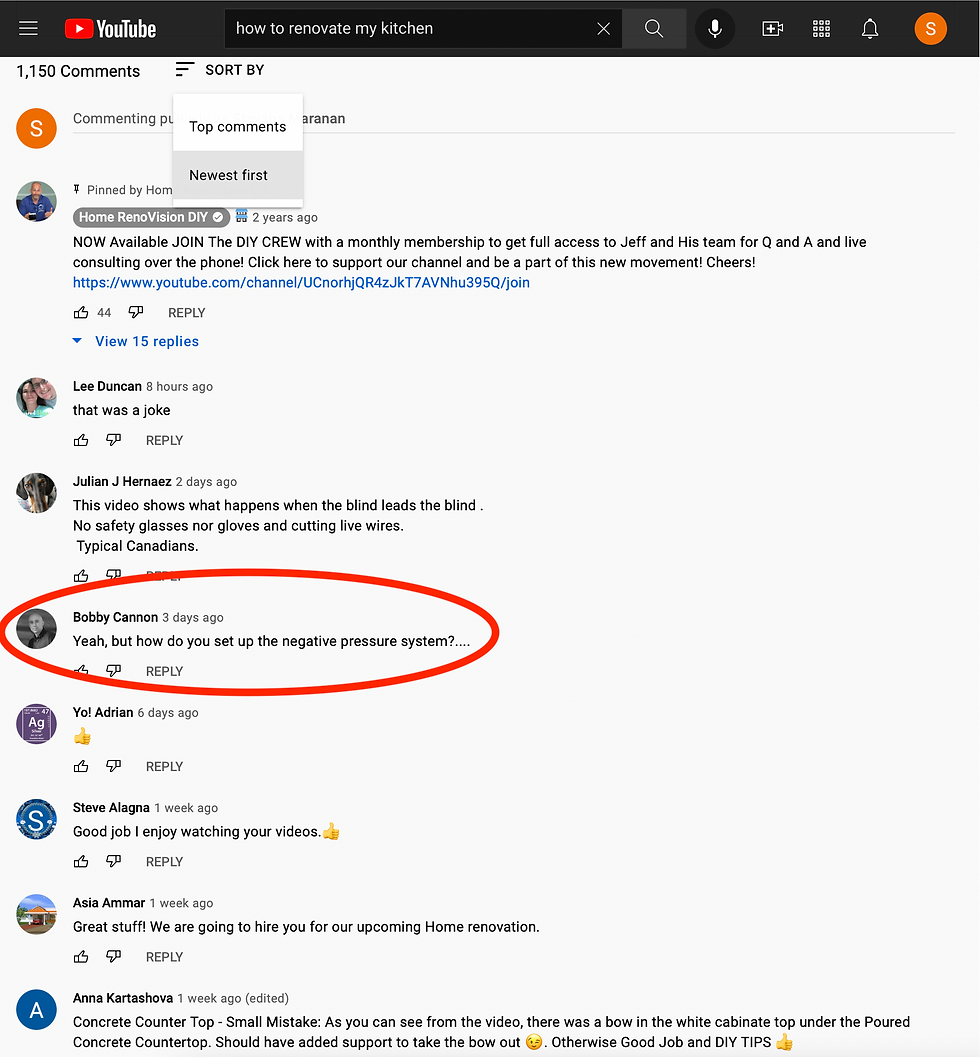
YouTube just generated ideas for your future “How to” videos for FREE! How awesome is that? This will also work using Google, iCloud, Yahoo, and pretty much any other search engine. Another way to research is to find others that utilize similar markets and look at what they're doing. What videos have they posted? What feedback are they getting? Go through comments and posts to learn what viewers are going to them for through the questions being asked. Don’t be afraid to take notes on areas that you think they are excelling in, and areas they are not.
Nick Nimmin's YouTube series on how to make quality YouTube Videos is the best start to finish guide on what goes into becoming a top content producer.
#3: Master Vocal Variety
It should come as no surprise that the most essential part of any video is the ability to gain and hold the attention of the viewers. According to AdAge, “if you have not fully engaged your audience after the first 30 seconds, you’ve likely lost 33% of your viewers, and after one minute, 45% of viewers have stopped watching.“ I guess it could potentially be due to the fact that most adult attention spans are only around 8 seconds long. A mixture of vocal variety like tone, volume, pace, and pause are examples of elements that command attention and keep it there.
In my opinion, Steve Job’s 2005 Stanford Commencement Address is the perfect example of what a speech with vocal variety sounds like. Within the first 30 seconds, he was able to grab my attention and kept me engaged all the way until the very end.
#4: Learn Proper Ways To Portray Nonverbal Cues
If you recall, the first thing I went over was being genuine. Non-verbal cues, alongside verbal cues, play a huge part in the authenticity of your videos. The meaning behind what comes out of our mouths is most definitely translated through body language. Movement should be natural and fluid because your viewers will be able to tell if your gestures are forced.
The easiest way to accomplish this is to try to loosen up your body and don’t think about your movements. Just remember, you are not a robot. Your movements will flow organically on camera as it does off camera. Lastly, don’t forget to look directly into the camera as if you are having a conversation with someone because that’s exactly what you are doing.
The Silent Language of Leaders: How Body Language Can Help- Or Hurt- How You Lead by writer, Carol Kinsey Goman talks about how, “too much eye contact is instinctively felt to be rude.” For instance, when you talk with someone in-person, occasionally breaking eye contact is normal, so why wouldn’t you make it a point to do the same when conversing with your audience? Good practice is to combine looking away when you are pausing or transitioning to a different concept.
Looking for other strategies and tips from experts? Click on the links below:


Comments